Bursting at the Seams
A new quilting blog by Karen Nikos-Rose. I will write on these pages of my adventures in quilting and teaching quilting that I am eager to share. The opinions and recommendations are my own./September 2026
Washing your quilt
Everyone asks me: Do you wash a quilt? Well, yes, just like you wash any bed cover. Yes, even T-shirt quilts. But there are some caveats. Most of the time, I throw in a few color catchers (the essential friend of college students who wash all their laundry in one load — and quilters), throw in a little bit of laundry detergent and wash on cold as soon as I finish a quilt. It shrinks a tiny, tiny bit, but not noticeably, and the laundering makes it fluff up a bit. It’s a good look. Cool water, in most cases, is all that is necessary unless it’s a quilt used by a baby or pet. Then I might recommend warm, but not hot, water.
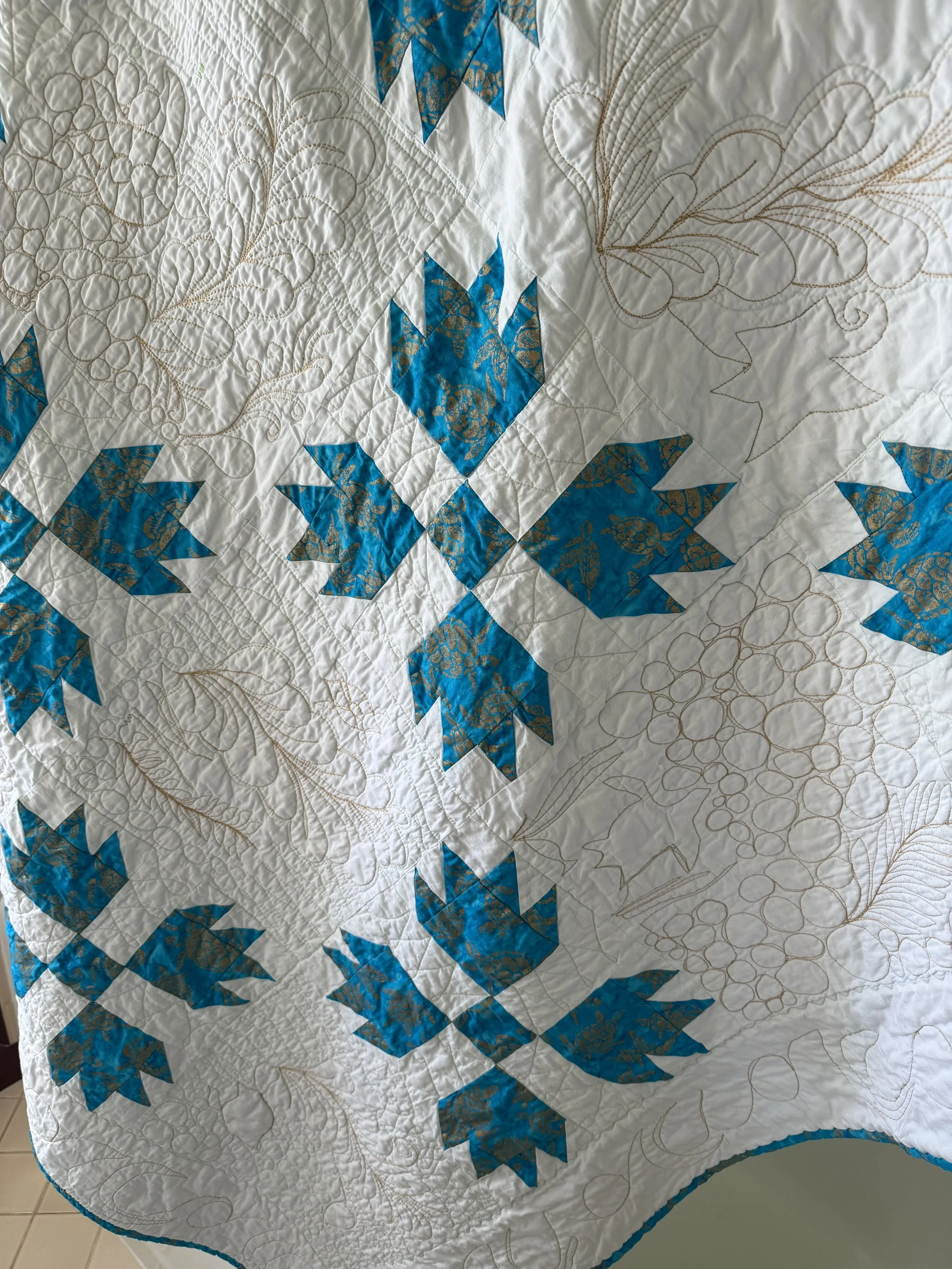
This recently finished quilt has no teal in the white parts of the quilt. This was not the case a few weeks ago when I experienced what’s known as a color bleed.
The other reason I wash a quilt after I finish it is so it will be clean. They go threw a lot in the days, weeks and months on their way to the finish line and could use a good bath. I can also hang my project on my clothesline and see any problems I might need to fix; trim threads when the sun is shining on it; and basically give it a good inspection before it is given to a new owner or to goes to live on my bed or couch. I don’t dry in the dryer, but some people do. (If you lack a clothesline outside, you can also hang over a bath or shower door or curtain rod.) That is my normal process. I also often pin a few color catchers to it with laundering instructions for its new owner. That’s it.
Tale of teal
But sometimes, this confidence in a superior result goes right out the window.
That happened about two weeks ago when I washed a teal and white “sea turtle”-themed, “Bear Paw” patterned quilt this usual way. I took it out of the cold wash and it looked great. Then, after a little bit of time in the 80-plus degree sun, I gave it a look. I saw the large white squares had turned light teal. Was it just the adjacent teal seams showing through the white fabric while damp? I feared that was not the case.
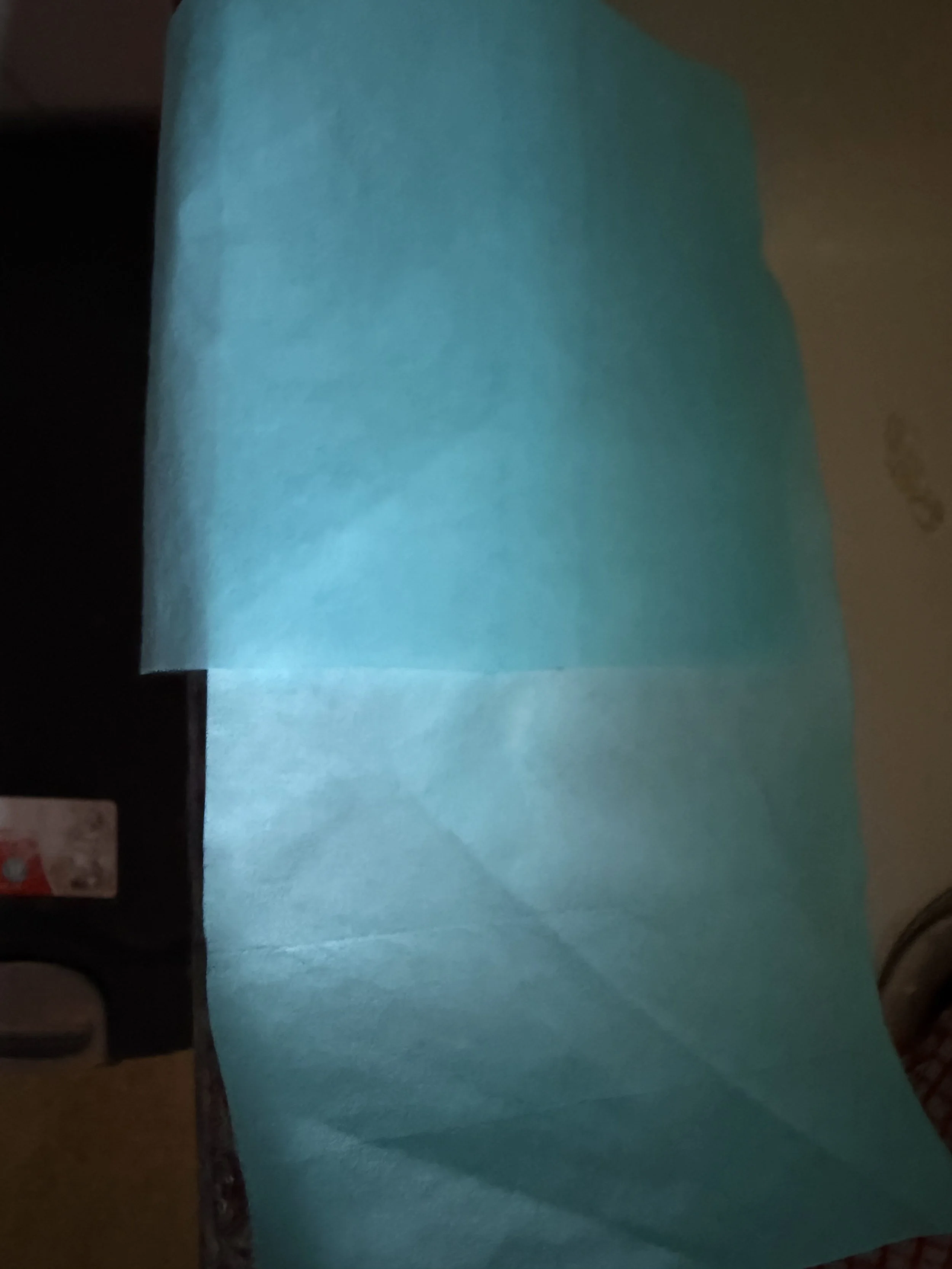
Here are the color catcher sheets I removed from the washer.
I looked in the washer, and recovered the spent color catcher sheets I’d used. They had caught so much color they were only a shade lighter than the teal on the quilt. This was unusual. My heart sank.
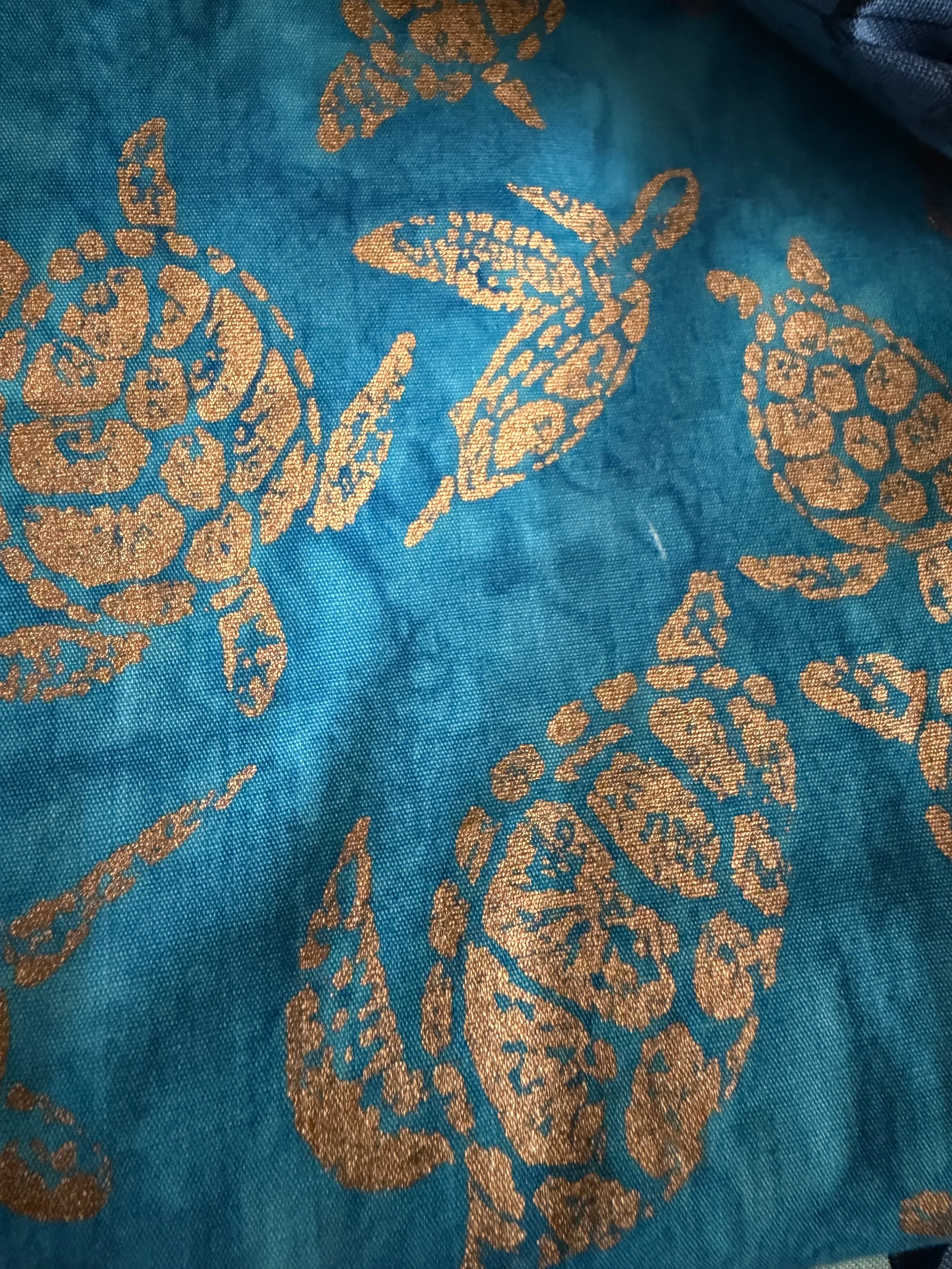
The turtles before their swim.
Color catchers work, I’m told, by absorbing some of the color from the water so it doesn’t sink back into your fabric. They usually look like a light version of the bright color you washed with them. But this job was just too much for them.
I panicked, mostly — a lot of work literally down the drain. But then I remembered reading other people’s blogs and articles about this issue, thinking, well, it never happened to me. Teal, and sometimes red and purple — which I dealt with in my very first sampler quilt 20 years ago with five or six color catchers — or any bright, saturated color, can run. I knew this.
What to do
What I should have done with a bright color, such as teal — a notoriously deep and prone-to-bleed color, it turns out — is prewash it before I even cut it. There’s even something called Retayne, which is a fixative, that will lock the color in the fabric. I’ve read of other ways to hold the color in too. Why I don’t prewash normally is because it’s easier to sew and quilt on new, unwashed fabric because it has a coating on it that makes it easier to work with. It has a snap to it and handles well. Once you wash quilting cotton, it tends to ravel, go a bit limp and requires a lot more pressing to keep its shape.
Back to reality, and onto a remedy for my mistake. So I whisked the still damp but potentially ruined quilt from the sun, which could have baked in the color for good. I then filled a bathtub with a few squirts of dish soap (most instructions say to use “Dawn” brand, but I didn’t) and hot water, immersed the throw-size quilt in the slurry, and said a few prayers. This is a recommended method (maybe not the prayers, but I recommend that anyway, regardless of your belief system). I left overnight, as recommended, and then redid this process the next day until the water ran clear. Wash, wring, rinse. Repeat. Again, and again. It was scary. The water needed to eventually be clear.
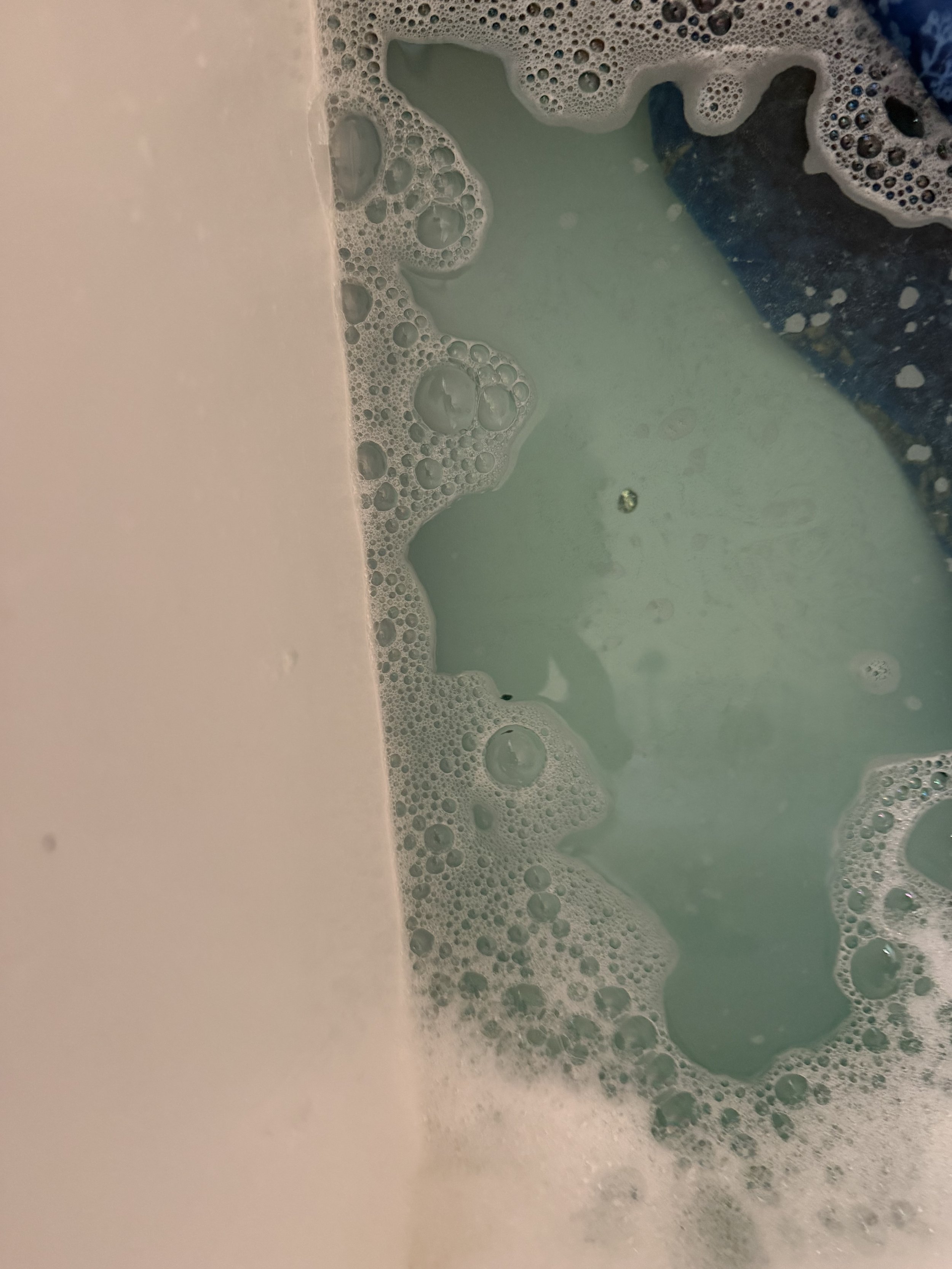
It is a good thing the bathtub was not needed because the quilt had to live there more than a full day and night. (We have another bathroom.)
Meanwhile, I followed another professional and generally accepted recommendation and ordered Synthrapol for overnight delivery. This is a commercial detergent that magically absorbs the extra color and suspends it in water, so it doesn’t get reabsorbed into the quilt. (Okay, it’s not magic, but it’s a chemical process I don’t understand so I won’t try to explain it because I would get it wrong.)
After the water was clear, or mostly clear, (the whole world looked teal to me at this point), I opted to transport the water-logged blanket to the washing machine a few rooms away using a large bucket. I followed the directions on the Synthrapol bottle, and carefully measured out the correct amount of liquid to add to a warm wash. I threw in a few color catchers for good measure. (This was probably redundant, but why take chances?) The quilt went in. Another prayer followed.
It was magic. the quilt came out of the washer fine. And remarkably, the teal parts of the quilt are just as bright as ever.
Phew.
I finished another quilt a couple days ago. It had red and purple in it, so I threw in a few color catchers, and measured out the Synthrapol in the front-loading washing machine I use at home. When the cycle was over, I held my breath and opened the door. All good. No color on the color catchers. The quilt looks fine. This is my new process with bright colors. Live and learn.
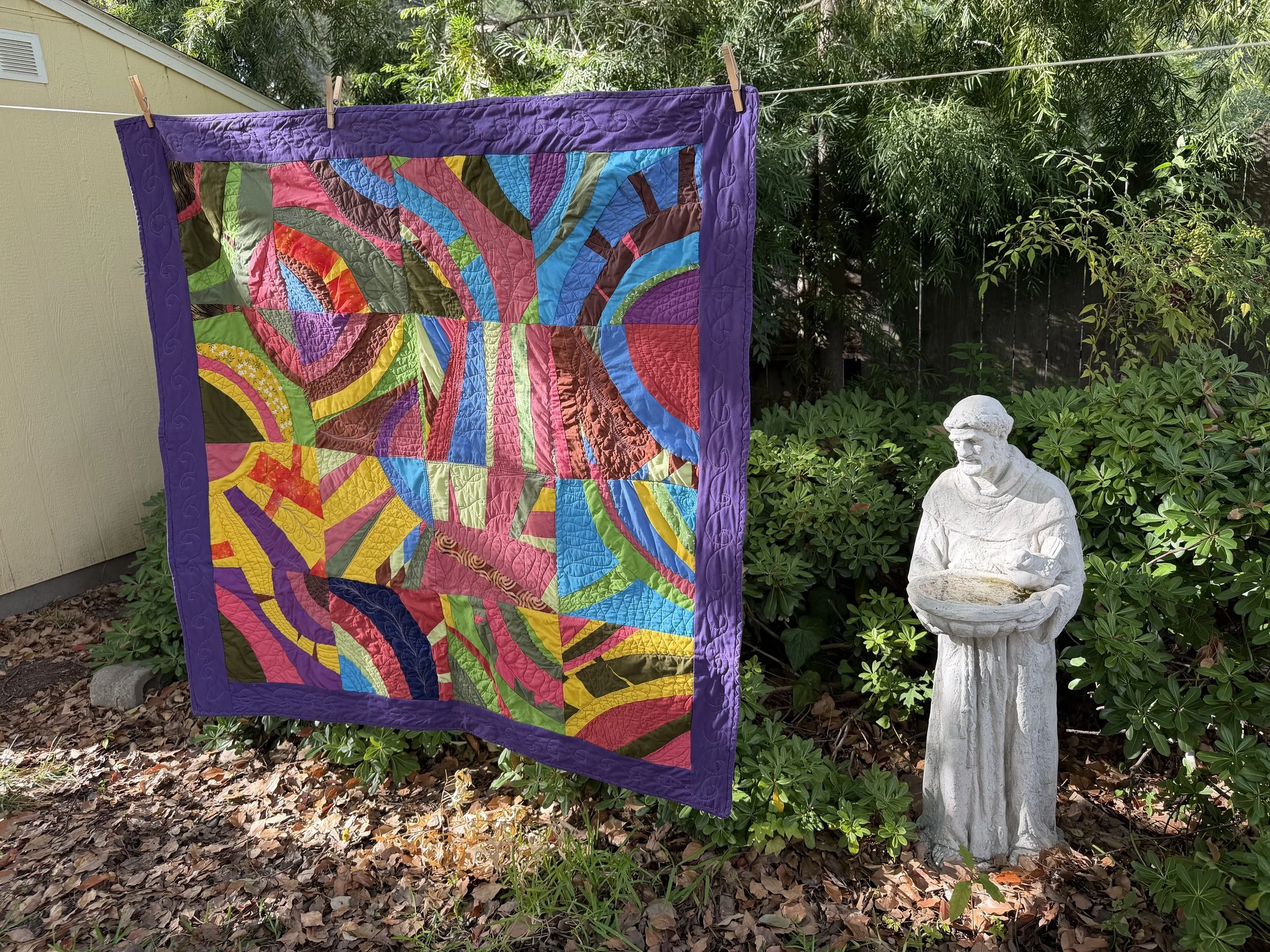
This quilt uses improvisational curved piecing, my first try at this form. All those bright colors did not run.
And I might even prewash someday.